
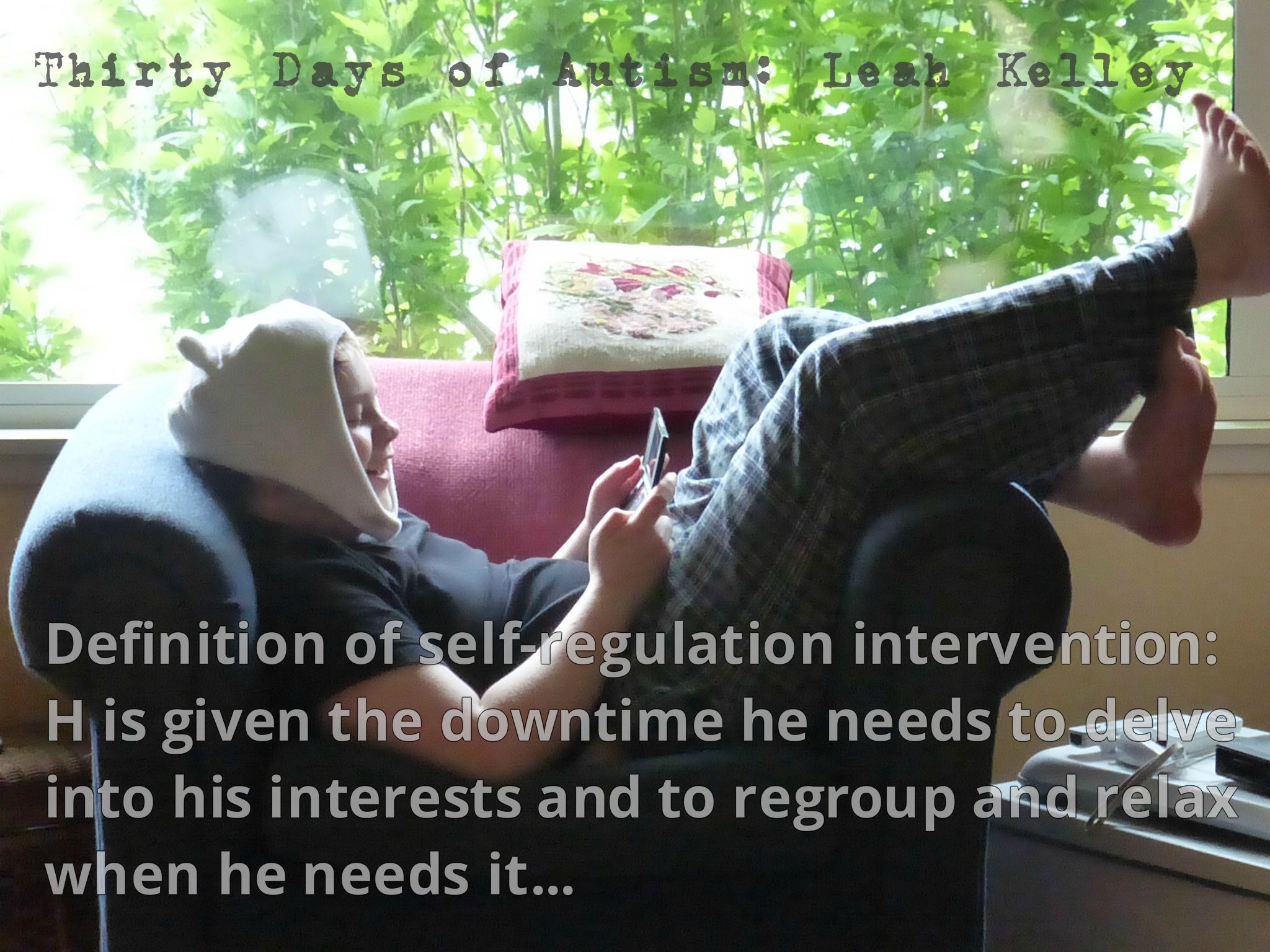
Definition of self-regulation intervention or therapy: H is given the downtime he needs to delve into his interests and to regroup and relax when he needs it…
(And you wouldn’t call this therapy if the kid were non Autistic, you’d call it relaxing.)
For me it is important to consider that the experience of being Autistic can be pathologized in ways I might not easily notice. As a parent, I hope that I am moving more and more in the direction of understanding H’s experience from the perspective of the social model of disability.
It is not complicated really, but for myself, I find it requires a mindful practice of reflection upon the things I have held to be true, and thus may have not questioned. In particular, I find myself more closely examining the language I am used to hearing and not noticing. Language is important and powerful, and far too often the pathologization and dehumanizing stance begins and is perpetuated in something as seemingly innocuous as our word choice.
Even for those who reject the disease paradigm, who are not looking to fix their child, and who accept them as they are, there can at times be a tendency to feel pulled toward ‘therapies and interventions’ that are really not natural or helpful or even developmentally sound when we consider moving toward the goal of growing into a self-determining adult.
Fortunately, there is an alternative and it can really be quite simple:
- give people down time – when they need it (and also proactively when they don’t)
- support them in developing self-understanding so they know what they need
- support them in recognizing for themselves when they need it
- support them in learning how to get it
- and nurture pride and sense of self, so that they feel confident and justified to pursue or ask for what they need
___________________________________________________
30 Days of Autism is a project designed to fight stigma, promote civil rights, and increase understanding and acceptance for those who process and experience the world differently.
© Leah Kelley, Thirty Days of Autism (2015)


 Thirty Days of Autism