
I am gathering resources to make it through the final week of school. Not actual learning resources, but personal resources, energy, stamina, resiliency… remembering to breathe…
I didn’t do much this weekend… I am keeping some parts of myself, my resources, in reserve…
Sometimes at this point, when I think of all the things I have left to complete, it can seem like an impossible task… so I have a few strategies I thought I might share…
Not the First Time:
I remind myself that I feel like this every year at the end of term. I used to feel like this in university, heck – even in high school, and I feel it now at the end of my 26th year of teaching. I think of similar situations – and remind myself that I got through them and I tell myself that as overwhelming as it may be, this is a short-term feeling and that it will not last forever.
Then…
Priorize:
I work to think about the next thing I have to accomplish… One next thing – rather than thinking about all of it. I do that one thing and then move on to the next. This helps me maintain focus, which is especially important for me because I am not a particularly effective multitasker.
Lists, Lists, Beautiful Lists:
I make use of lists – extensive use of lists, which helps me with both setting priorities and with tackling the feeling of being overwhelmed. I get it all down – so it does not keep swirling in my head in the present – and I don’t have to try to keep it there so as to not lose track. Once it is on the list – I can organize and put it aside (out of my thinking) until the right time. This calms me…
Lists help me set priorities:
To make this work I need a plan – and for me that plan is a series of lists and sub-lists in my day planner… and a liberal sprinkling of post-it notes.
I can see the scope of what needs to be accomplished and then I can work to organize my time and fit tasks to the amount of time and the logical ordering of the tasks in a temporal way – and also in terms of importance.
There is an ordering in terms of some tasks needing to take place prior to others – some of this is just plain logic – and some requirements are related to other outside timelines and pressures.
I use a calendar to do this…
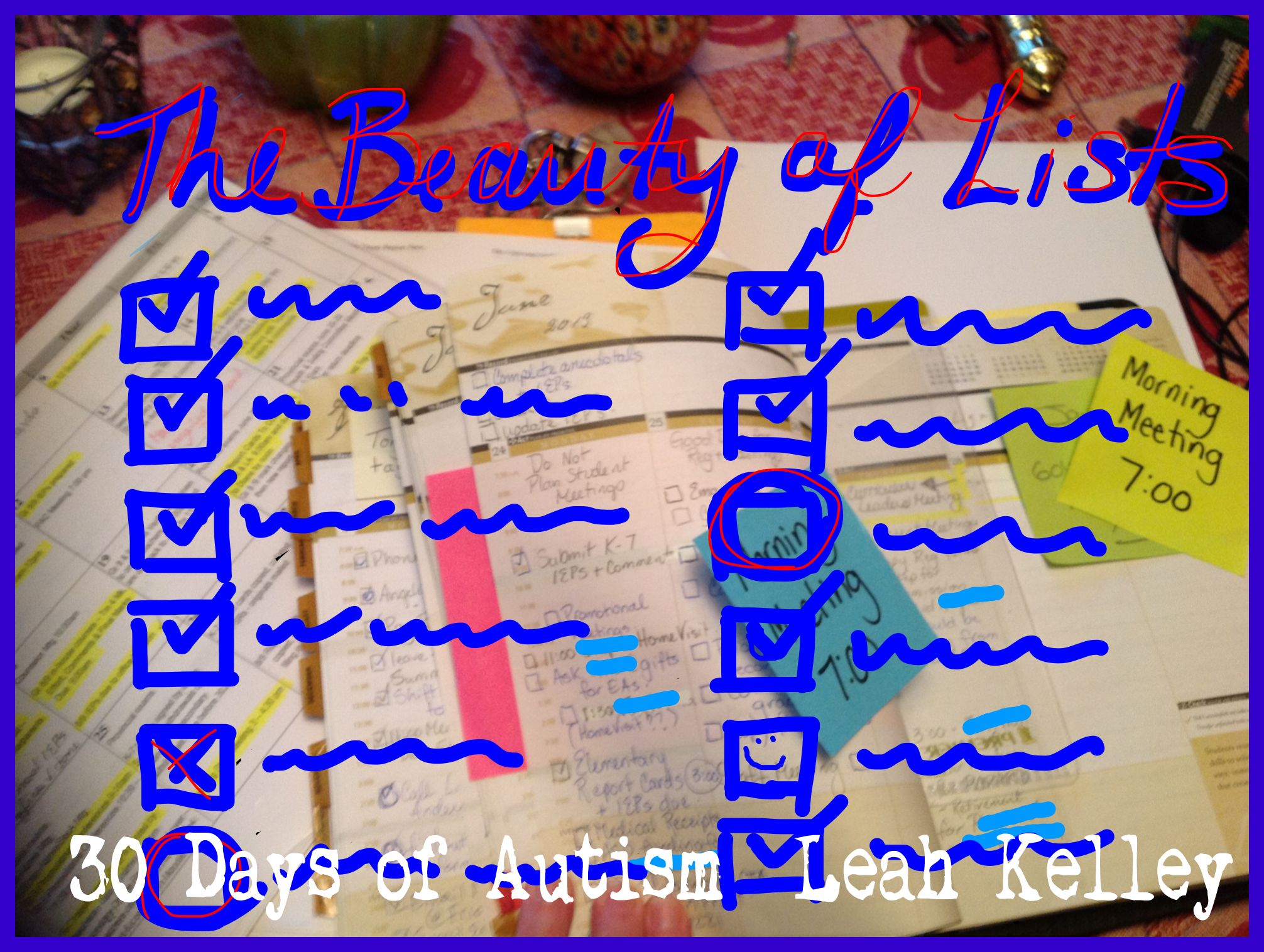
I also have a simple system of boxes that I draw beside each and every task = ❒
I check off the box when the task is completed = √
These are then further coded…
I put an X in the box if the task becomes irrelevant or is cancelled = X
I circle the box if it is an emerging priority left over from a previous day – or for that day and if it is a MUST DO = 〇
No Shoulding on yourself:
I think of my lists with another conceptual layer as well. After years of practice – this is somewhat internalized: I have a must do – should do – and could do ranking to my tasks.
I used to write my lists this way: The must do list was that day’s tasks – the should do list – was in essence planned for the following day – and the could do list followed those on the next day. The idea with this system is that the should dos – become the must dos the following day and the could dos become the should dos…and so on…
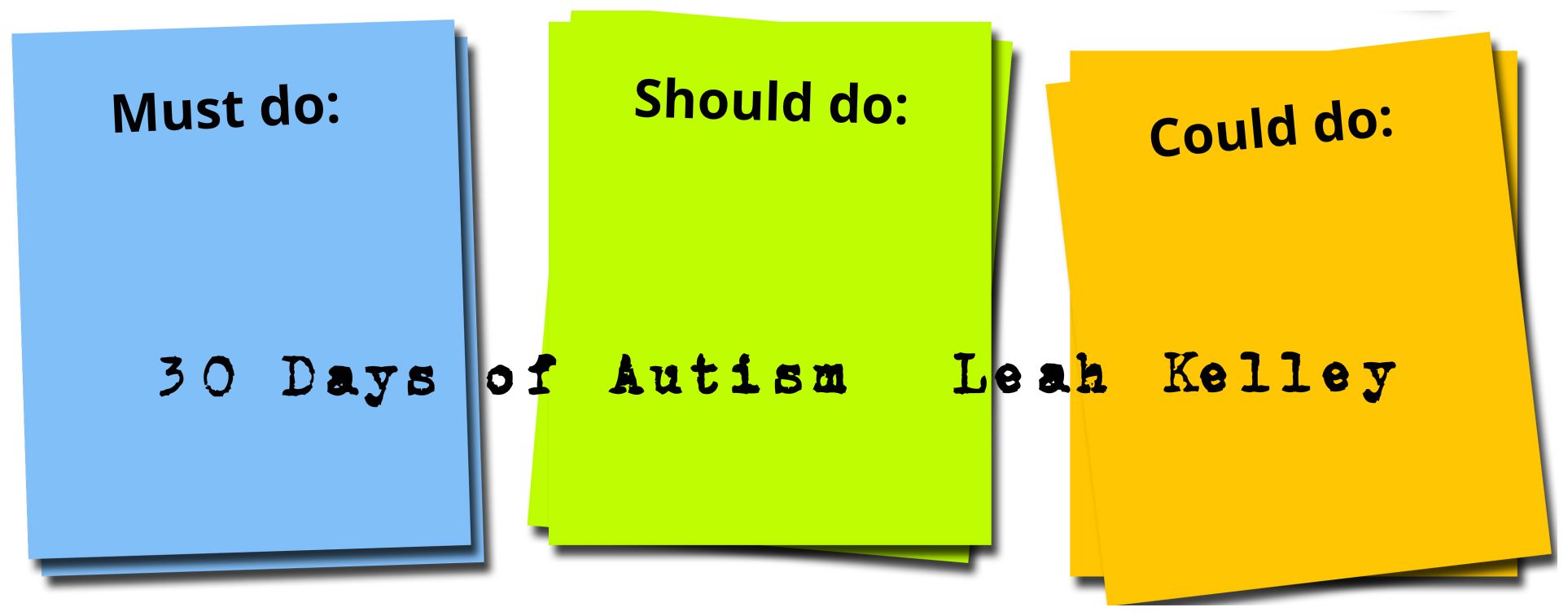 I remind myself that it is unhealthy to be shoulding on myself – as I work to be realistic, and positively frame my limitations.
Looking Back:
I flip thought previous weeks in my planner – and if there is a task which has been carried over and then finally accomplished – I make a little smiley face in the box. This tells me it wasn’t done that week – but it was eventually accomplished. I also sometimes find a task that has not been completed, and that in the midst of busy, somehow fell off the side of my desk. If it is still relevant, I add that task to this week’s plan.
It takes a little time to do this – but I gain way more time and calm and focus – and relief from feeling overwhelmed in doing so. As I work to tackle the next thing – instead of thinking of all I need to do… the payback for me is enormous.
___________________________________________________
30 Days of Autism is a project designed to fight stigma, promote civil rights, and increase understanding and acceptance for those who process and experience the world differently.
© Leah Kelley, Thirty Days of Autism, (2013)



 Thirty Days of Autism