
You mission… should you choose to accept it… will be to be a friend to this other child in your class…
No – really…
This will be really great!
I will give you extrinsic rewards and reinforcements for being a good friend to this child and it will make me feel good as the teacher to know that this child is being included… and you will feel good for helping someone who needs it…
Nevermind that this is stigmatizing…
And… um… let’s just agree to overlook that it reinforces the underlying message that this other child should be pitied and doesn’t merit being included as they are – as our equal – as a human being – but instead – as a project…
And… um… maybe we can also overlook that somewhere in there as your teacher I am reinforcing the message that this child with a disability is not worthy of your friendship without my meddling and your desire for my approval…
Seriously though…
When kids are assigned to other kids – it is not friendship.
The act of assignment runs counter to all the qualities that make a friendship a thing. It sends the message that this person isn’t worthy of friendship without the reward of extrinsic approval of being a mini helpery person or do-gooder. And that message is ableist and I think too, it can make it more difficult and interfere with the process of establishing authentic relationships.
It sets up the relationship as unbalanced and unequal right from the start, but there are ways to structure and model things in the classroom (and on the playground – and in our lives) to create opportunities for kids to develop authentic friendships and positive relationships without it being an assignment.
And too… it needs to be considered that pushing children to connect or to be social on our agenda and timeline – is not honouring – some children are not ready… and some might need a break… or…
In the early primary grades, H used to run up the slide as soon as he got on the playground (which was against the rules) so he would get ‘in trouble’ and then be sent to the Student Support room where he could relax building with Lego. He didn’t want to be in the throng and he needed a quiet break to regroup so he could be ready to again be in the classroom (which is a highly demanding and social environment). It would have been nice if a quiet place to renew was an option without needing to ‘break the rules’ and if educators could understand more widely and with greater depth that recess and the playground are not a break for many, many kids.

H and his younger friend Fallon
Another thing to consider when thinking about the way H is developing friendships and interest in being increasingly social is that it is just fine if he gets on better with adults. If he doesn’t click with a lot of 16-year-olds – the reality is that he will only be 16 for a year, but he will be an adult for a long, long time.
At times, people can be limited in thinking about this and by the way this is framed with the pervasive bias that same age relationships are somehow superior. It seems many systems are stuck in this paradigm and feel they are doing right if they are forcing Autistic students (and students with other disabilities) to be squeezed into it.
My son is benefiting tremendously from connecting with adults and older teens – and also from cultivating friendships with much younger kids. Thinking about himself in a mentoring position is incredibly powerful for building an image of himself as giving and capable.
These friendships and connections are meaningful and REAL.
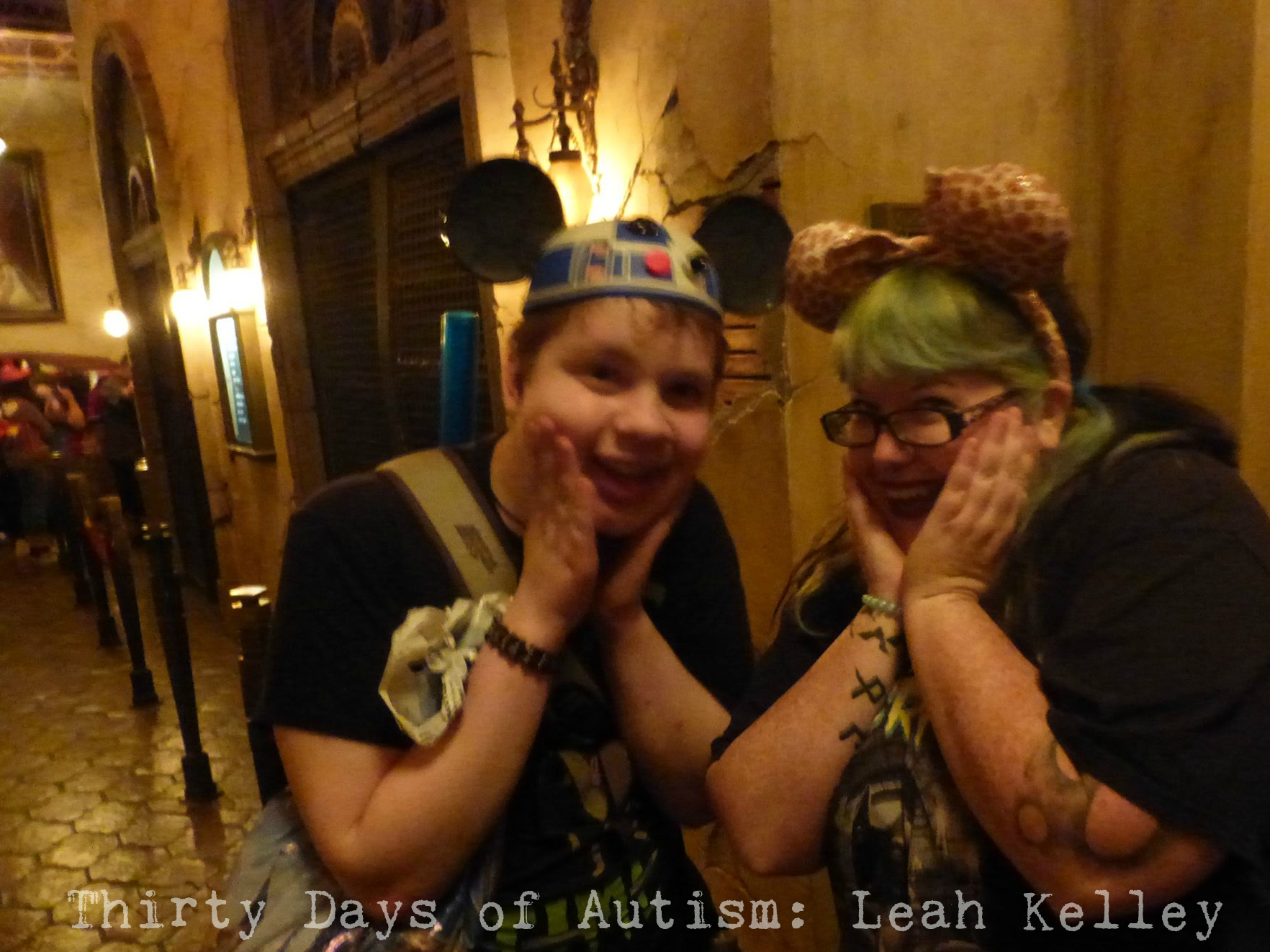
It’s a Giraffe Party in the Tower of Terror
Related posts:
Judy Endow on Assigned Friends Outcome
http://www.judyendow.com/advocacy/assigned-friends-outcome/
 And while you’re at it… check out Giraffe Party on Facebook
___________________________________________________
30 Days of Autism is a project designed to fight stigma, promote civil rights, and increase understanding and acceptance for those who process and experience the world differently.
© Leah Kelley, Thirty Days of Autism (2015)



 Thirty Days of Autism